
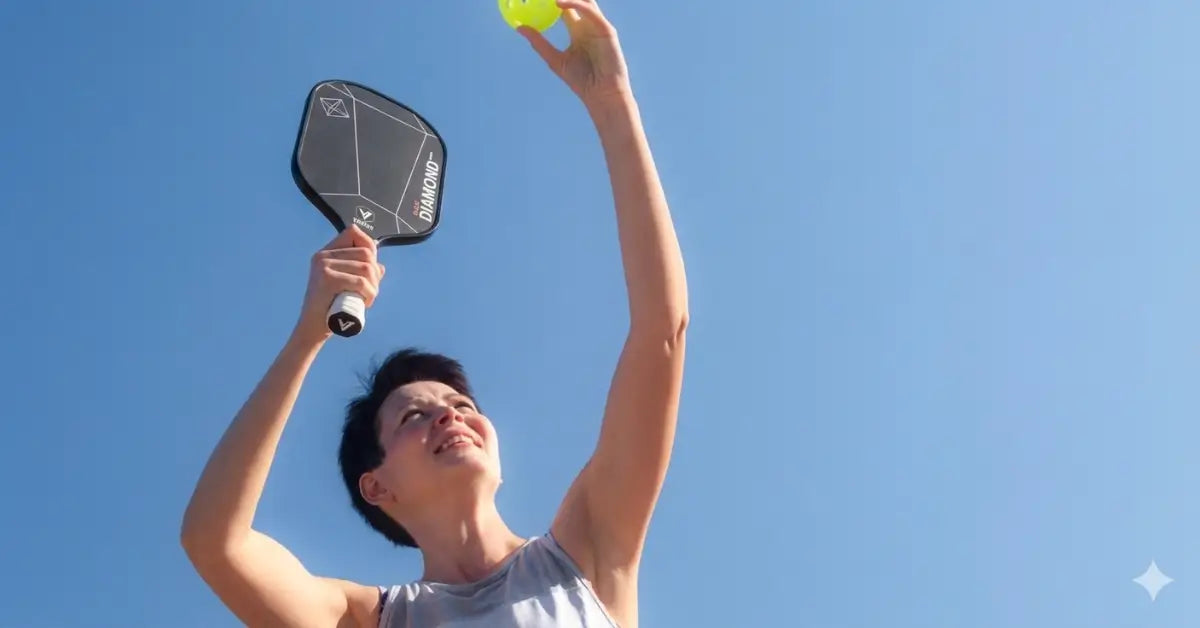
You show up to the court. Someone hands you a paddle. And then eight people start talking at once about the kitchen, the two-bounce rule, and something called a side-out — and suddenly you feel like you've stumbled into a game that has its own private language.
Here's the truth: the basic rules of pickleball are genuinely simple. You can learn everything you need in about ten minutes. The confusion comes from learning them out of order, or from someone explaining three rules at once while you're also trying to figure out where to stand.
This guide walks through every rule you'll actually encounter in your first few games — one at a time, in the order they matter.

Why Pickleball Rules Are Easier Than They Look
Pickleball borrows ideas from tennis, badminton, and ping-pong, but it doesn't carry all the complexity. There's no tiebreak math, no fault sequences, no ad scoring. The full rulebook from USA Pickleball runs long, but the rules that govern 95% of recreational play fit on a single page.
What trips beginners up isn't the number of rules — it's two or three specific ones that feel counterintuitive. Once those click, the game opens up fast.
The Serve: Where Every Rally Legally Begins
Every point starts with a serve, and pickleball's serving rules are more specific than most new players expect. Get this right from day one and you'll avoid the most common source of early faults.
The Diagonal, the Bounce, and the Baseline
The serve must be made underhand — your paddle contact point has to be below your wrist, and the paddle head must be below your wrist at the moment of contact. You serve diagonally, into the opposite service box, and the ball must clear the non-volley zone (the kitchen) and land in the correct service box.
There's no drop serve exception to worry about as a beginner: you can either drop the ball and let it bounce before striking it (a drop serve), or toss it and hit it directly (a volley serve). Both are legal. Just keep it underhand.
One serving rule that changed in 2021: let serves are now in play. If your serve clips the net and still lands in the correct service box, the rally continues. No replay. Many players — even experienced ones — still call lets by the old rule. Know that the modern rule says play on.
What Counts as a Fault on the Serve
A serve fault ends the rally immediately and costs you the serve (or, in doubles, moves to the second server). The most common ones:
- Ball lands in the kitchen or on the kitchen line
- Ball lands out of bounds on the far side
- Server's foot crosses the baseline or sideline at contact
- Serve hits the net and doesn't make it over
- Ball is struck overhand or above the waist
One line rule worth knowing: the ball may land on any service box line except the non-volley zone line. Kitchen line contact = fault. Every other line = in.
The Two-Bounce Rule Almost Every New Player Breaks
After the serve lands, the receiving team must let it bounce before returning it. That part most people get. What they miss: the serving team must also let the return bounce before they can play it.
Both teams must allow one bounce each before either side can start volleying. That's the two-bounce rule — sometimes called the double-bounce rule — and it exists specifically to prevent the serving team from rushing the net and dominating immediately. It forces a few groundstrokes at the start of every rally, which makes the game more interesting and gives both sides a fair chance to establish position.
Once both bounces have happened, either team can volley freely — except when they're in the kitchen.
The Kitchen: Pickleball's Most Misunderstood Zone
The non-volley zone — the kitchen — is the 7-foot area on both sides of the net. It's the rule that makes pickleball different from every other net sport, and it causes more disputes in recreational play than everything else combined.
The core rule: you cannot volley the ball while standing in the kitchen or while your momentum carries you into the kitchen after a volley. A volley is any ball struck out of the air, before it bounces.
What's allowed in the kitchen:
- Entering to play a ball that has already bounced inside it
- Standing there between rallies
- Letting a ball bounce in the kitchen and then stepping in to return it
What's a fault:
- Volleying from inside the kitchen line (including the line itself)
- Stepping into the kitchen as part of your volleying motion — even if the ball is long gone by the time your foot lands
- Your paddle, clothing, or anything attached to you touching the kitchen surface during a volley
The momentum rule catches people off guard. You can hit a volley just behind the kitchen line — a perfectly legal shot — but if your follow-through carries your foot over the line, that's a fault. The rule applies to your entire body, not just your feet.
For a more detailed look at edge cases and NVZ violations, pickleball kitchen rules covers the scenarios that come up most in competitive play.
How Pickleball Scoring Actually Works
Pickleball uses rally scoring's opposite — only the serving side can score a point. This is called side-out scoring, and it's a psychological shift if you're coming from tennis or racquetball where every rally counts for someone.
Here's the flow:
- The serving team wins the rally → they score a point and serve again
- The serving team loses the rally → they lose the serve (side-out); no point scored
- The receiving team now serves — and can only score if they win rallies while serving
Games are typically played to 11 points, and you must win by 2. Tournament play sometimes uses games to 15 or 21.
Calling the score in doubles: before every serve, the server calls three numbers — the serving team's score, the receiving team's score, and whether they are the first or second server. A score call of "4–2–2" means the serving team has 4, the receiving team has 2, and this is the second server. At the very start of a game, the first serving team begins as "second server" (called as 0–0–2) so neither side gets an automatic two-serve advantage in the opening rally.
Singles scoring works the same, minus the server number.
Faults, Dead Balls, and What Happens When You Mess Up
A fault ends the rally. In pickleball, faults are clean — there's no fault sequence or warning system. You fault, the rally is over. If the serving side faulted, it's a side-out. If the receiving side faulted, the serving team scores.
Common faults beyond the serve:
- Ball lands out of bounds
- Ball hits the net and doesn't cross
- Volleying from the kitchen (NVZ fault)
- Ball bounces twice before you return it
- A player, their clothing, or their paddle contacts the net during play
- Ball strikes a player on the body or clothing
Dead balls are different. A dead ball is called when play must stop for a reason unrelated to a fault — for example, a ball from another court rolls in. The rally is replayed with no score change and no side-out.
Lines are in. If any part of the ball contacts the line, the ball is in — with one exception: the kitchen line on serves, which is always a fault.
Doubles vs. Singles: One Rule That Changes Everything
The gameplay feel of doubles and singles is similar, but one rule shifts meaningfully: serve rotation.
In doubles, each team gets two serves per side-out (one for each player), except at the very start of the game where the first team to serve only gets one serve. Players on the same team alternate serving after each point won. When the serve switches sides, the player on the right side always serves first.
In singles, there's no second server. Lose the rally while serving and it's immediately a side-out. Singles is a faster, more physically demanding format because of this — there's no partner to cover.
The Equipment Rules Beginners Always Overlook
Your paddle and ball have to meet official standards to be legal for sanctioned play. For casual recreational games this rarely comes up, but if you're playing at a club or entering any kind of tournament, it matters.
Approved pickleball paddles must have a smooth, non-textured hitting surface with no holes, no rubber, and no springs. The combined length and width of the paddle cannot exceed 24 inches, and the length alone cannot exceed 17 inches. Paddles with any electronic component or that are cracked, delaminated, or altered are illegal.
If you're still playing with a borrowed or entry-level paddle and starting to take the game seriously, choosing paddles built to meet official pickleball standards is worth doing early — a paddle that's worn, delaminated, or off-spec can develop dead spots that mask real technique flaws. The Velox Origin is a solid first serious paddle: mid-weight, USAPA-approved, and forgiving enough to support the learning curve without punishing early mechanics.
Balls must be made of a uniform, durable plastic with 26–40 circular holes and meet specific weight and diameter specs. Indoor and outdoor balls differ — outdoor balls have smaller holes and handle wind better.
You Know Enough to Play
The basic rules of pickleball aren't complicated. Serve underhand and diagonally. Let the ball bounce twice before volleying begins. Stay out of the kitchen when you're volleying. Score only when you're serving. Call your faults honestly.
That's the game. Everything else — spin strategy, stacking formations, erne shots — comes later, once you're comfortable with what's happening on the court. For now, get out there. The fastest way to internalize these rules is five minutes of live play, not five more minutes of reading.
FAQs
What are the basic rules of pickleball for beginners?
Serve underhand diagonally, let the ball bounce once on each side before volleying (the two-bounce rule), avoid volleying inside the kitchen, and score only while serving — first to 11 wins.
How does scoring work in pickleball?
Only the serving team can score; winning a rally while receiving earns the serve, not a point. Games go to 11 and must be won by 2.
What is the kitchen rule in pickleball?
The kitchen is the 7-foot non-volley zone on both sides of the net — you cannot volley the ball while standing there or while your momentum carries you in after hitting a volley.
What is the two-bounce rule in pickleball?
After the serve, the receiving team must let it bounce before returning, and the serving team must let that return bounce before playing it — two mandatory bounces before anyone can volley.
What counts as a fault in pickleball?
Hitting the ball out of bounds, volleying from the kitchen, double-bouncing the ball, letting the ball touch your body, or your paddle or body contacting the net — any of these ends the rally.
Can you volley in the kitchen in pickleball?
No — you can enter the kitchen to play a ball that has bounced there, but striking the ball out of the air while standing in the kitchen or on the kitchen line is always a fault.
Does the serve have to bounce in pickleball?
The receiver must always let the serve bounce before returning it; the server then must let the return bounce before playing it — after those two bounces, both teams can volley freely.


