
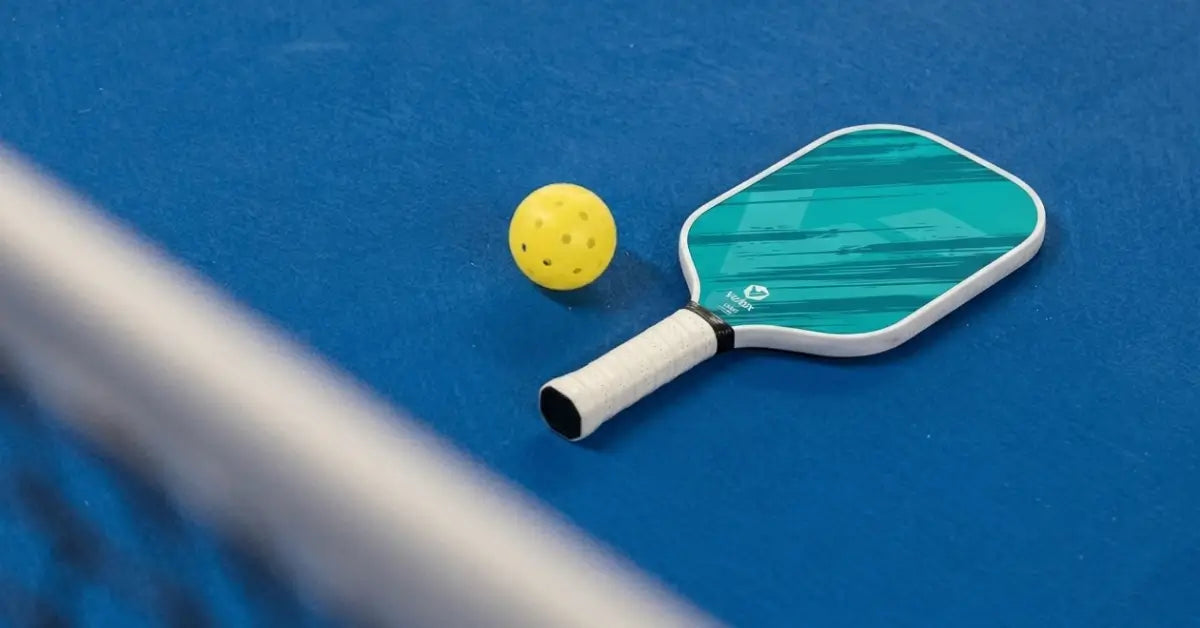
You're standing at the baseline, score called, paddle ready — and then your serve clips the kitchen line. Fault. Side out. You never even touched the ball in a rally.
Of all the ways to lose a point in pickleball, a service fault is uniquely frustrating because it happens before anything interesting starts. Understanding the pickleball serving rules isn't just about staying legal — it's the fastest way to eliminate a category of errors that newer players hand away constantly. If you want a solid grounding in the broader ruleset that governs everything from scoring to the kitchen, that's worth reading separately. This article focuses entirely on the serve.

Why the Serve Is the Only Shot in Pickleball You Can Fault Before the Rally Starts
Every other fault in pickleball happens during active play — a ball that lands out, a foot that touches the kitchen during a volley, a double-bounce missed. The serve is different. You can fault before the ball has even traveled five feet. That's because the serve in pickleball carries more structural requirements than any other single shot.
Those requirements exist for a reason. Unlike tennis, where a dominant serve can short-circuit the entire point, pickleball was designed so the serve functions as a neutral initiator — a way to start the rally, not win it. The upward arc requirement, the waist-height restriction, the diagonal placement — all of it is engineered to keep the game in the middle of the court, where strategy and skill decide the outcome. When you understand that logic, the rules stop feeling arbitrary.
The Five Core Rules Every Legal Serve Must Follow
Every serve in pickleball — whether you're playing in a backyard or a sanctioned tournament — must satisfy all five of these conditions simultaneously. Missing any one of them is an immediate fault.
- Upward arc motion. Your paddle arm must be moving upward at the moment of contact. A flat, horizontal swing or any downward stroke is illegal. This is the single rule most recreational players quietly violate without realizing it.
- Contact below the waist. The ball must be struck at a height below your navel. USA Pickleball defines the waist as the belly button — there's no ambiguity there.
- Paddle head below wrist. At the moment of contact, the highest point of your paddle head must be below the highest point of your wrist. Drop your wrist slightly, and you're legal. Cock your wrist back, and you're almost certainly not.
- At least one foot behind the baseline. Both feet can be behind the line — that's fine. But you cannot have both feet on or past the baseline at contact. Stepping on the line counts as a fault. So does the foot touching the imaginary extension of the centerline or sideline.
- No pre-contact spin imparted by hand or paddle. You cannot use your fingers or your paddle face to put spin on the ball during the release. Once the ball is in the air and you swing, spin generated by your stroke is perfectly legal. The restriction is only on manipulation during the release itself.
There are no second serves in pickleball. Miss on any of the above, and the serve goes to your opponent — or, in doubles, to your partner if you're the first server.
Volley Serve vs. Drop Serve: What the Rules Actually Require for Each
There are two legal ways to serve, and they operate under slightly different mechanical rules. Knowing both makes you harder to read.
Volley Serve Mechanics
The volley serve is the traditional method — you hold the ball, toss it slightly, and strike it before it bounces. All five rules above apply in full. The upward arc requirement is what creates the most difficulty here; players who come from a tennis background have a tendency to serve with a flat or slightly downward motion, which is a fault every time.
One detail that catches players off guard: you can toss the ball upward before striking it on a volley serve. There is no restriction on how high you release it, as long as contact happens below the waist. Some players use a small toss to time their swing better — that's entirely within the rules.
Drop Serve Mechanics (Including the 2025 Update)
The drop serve was made permanent in the USA Pickleball rulebook in 2022 and received a meaningful update for 2025. Here's what it requires: you release the ball — using either your hand or your paddle face (that's the 2025 change) — and allow it to fall naturally. No throwing it down, no adding pace or spin during the release. It just drops.
After the bounce, you can hit it however you like. The upward arc, waist-height, and paddle-head-below-wrist rules do not apply to a drop serve after the bounce. That's why players with wrist limitations or those transitioning from tennis often prefer it — it removes three of the five restrictions entirely. The foot position and diagonal placement rules still apply.
The 2025 change to allow paddle-release was clarifying language, not a new technique. If you let the ball roll off your paddle face by gravity alone, with no spin added, that's a legal drop serve release.
Where You Stand and Where the Ball Must Land
Serving position and landing placement are governed by the score — specifically, your team's total score.
Your position: If your score is even (0, 2, 4, 6...), you serve from the right side. If your score is odd (1, 3, 5...), you serve from the left. In doubles, this applies to the team's score and determines which partner is serving from which side. Getting this wrong — serving from the correct side but with the wrong player — is a fault.
Where the ball must land: The serve must travel diagonally cross-court and land in the service court on the opposite side of the net. It must clear the non-volley zone completely. Landing on the NVZ line is a fault. Landing on the baseline, centerline, or sideline of the service box is in.
The kitchen line is where most placement faults happen. Aim for the back third of the service box — deep serves are both more tactically useful and further from the fault zone.
The Serving Faults That End Rallies Before They Begin
Players lose serve (or points, in rally scoring) to the same handful of errors repeatedly. Knowing them by name is the first step to eliminating them.
- Kitchen fault: Ball lands on the NVZ or its line. The most common serve fault.
- Foot fault: Any part of your foot contacts the baseline, the sideline extension, or the centerline extension before you make contact with the ball.
- Waist-height violation: Contact above the navel on a volley serve.
- Spin release: Using fingers or paddle to impart rotation during the ball release — not the stroke.
- Wrong server or wrong position in doubles: Serving from the right side when your score is odd, or vice versa. In recreational play this is often waved off, but in any organized match it's called.
- Serve clock fault: Most players don't know this one exists. Once the score is called, you have 10 seconds to serve. In tournament play, failing to serve within that window is a fault. The referee calls the score — your clock starts there.
One important distinction: a fault on the serve means you lose the serve (or, in doubles, your partner serves next). It is not automatically a point for your opponent unless you're playing rally scoring.
Serving Strategy That Works Within the Rules
Knowing the rules gets you legal. Using them well gets you points.
Deep serves are worth prioritizing. A serve that lands near the baseline pins your opponent back, gives you more time to advance toward the kitchen line, and limits the angle of their return. The rule that the ball must clear the NVZ gives you the entire back half of the service box as your legal target zone — use it.
Mixing your serve type is underrated at the beginner and intermediate level. If you alternate between a volley serve and a drop serve, you change the timing your opponent has to work with. Neither serve needs to be aggressive; the value is in the variation, not the pace.
Once you're consistent, a well-placed serve is one of the clearest advantages a control-oriented paddle compounds. Players focused on serve consistency often find that a control-oriented paddle makes a measurable difference — particularly on the drop serve, where touch matters more than power.
FAQs
Can you serve overhand in pickleball?
Overhand serves are not legal — contact must be made below the waist with an upward paddle arc, which makes a true overhand motion a fault by definition.
Can you spin the ball when serving in pickleball?
You cannot spin the ball during the release, but spin generated by your paddle stroke after you swing is completely legal and common at higher levels of play.
How many seconds do you have to serve in pickleball?
Once the score has been called, the server has 10 seconds to execute the serve — failing to do so within that window is a fault in sanctioned play.
What happens if the serve hits the net and goes in?
Unlike tennis, pickleball has no "let" rule for serves. If the ball clips the net and lands in the correct service court, it is live and the rally continues.
Where does the serve have to land in pickleball?
The serve must land diagonally cross-court, clear the non-volley zone completely, and land within the bounds of the opposing service court — including any boundary line except the NVZ line.
What are the serving rules for doubles specifically?
In doubles, which player serves is determined by the team's score: the even/right–odd/left rule applies to each player's position. The second-server system also means you get two fault opportunities before a side out, except at the start of each game when only one server gets a turn.
What is a drop serve in pickleball?
A drop serve is when you release the ball — either from your hand or paddle face — and let it bounce before striking it. After the bounce, the waist-height and upward-arc restrictions don't apply, making it a useful option for players who find the volley serve mechanics difficult.
The Serve as Your Baseline
Most rallies in pickleball are decided at the kitchen line, not at the baseline. But you can't get to the kitchen if you're handing away serves before the rally starts.
The pickleball serving rules aren't complicated once you see their structure — five mechanical requirements, one direction, one bounce of the court, and a 10-second clock. Get those right consistently, and the serve stops being a liability. That's when the actual game begins.


